
☀️🌡️Surviving Extreme Heat: Strategies and Challenges in Conflict Zones⚔️
Climate change is rapidly transforming the global landscape, and military operations are no exception. As extreme heat becomes a daily reality in many regions, Armed Forces must adapt their strategies to ensure operational effectiveness and the Safety of their troops.
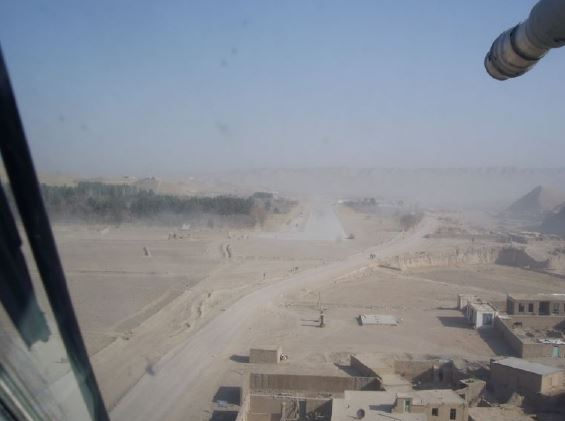
The article below explores how extreme conditions affect military operations, from the impact on equipment and infrastructure to the challenges faced by human resources on the battlefield. It details ingenious strategies and technologies employed to guarantee safety and optimal performance under conditions that push human and mechanical limits. From adaptations in clothing to innovations in aircraft operations, discover the courage and science behind these critical missions. A narrative that not only highlights bravery but also the technical ingenuity that makes these operations examples of resilience and adaptability.
Additionally, it dive into innovations within the aerospace industry aimed at mitigating these effects and maintaining resilience in an increasingly hostile environment.
This article is just a first step towards understanding the complex landscape that Armed Forces face in their struggle to adapt to a changing and increasingly extreme world as well as to outline a series of recommendations for mitigating the negative effects of aircrew heat exposure, which can be employed in any unit on national territory during the summer, and why not, in our daily activities, especially in jobs that also face extreme conditions such as aircraft line maintenance.
Before diving into the main topic of the article, let me briefly introduce the influence of climate change on military operations in terms of challenges, adaptations, and industrial strategies. Climate change, a phenomenon that affects all aspects of human life, is also reshaping military operations worldwide.
Climate change is considered a systemic risk that alters geostrategic, operational, and tactical scenarios. The effects of climate change challenge the resilience of military installations and equipment, create more complex operational conditions, and change the nature of the strategic environment. These changes force the Armed Forces to adapt their operations to maintain their effectiveness in an increasingly hostile world from a climatic point of view.
According to reports from the Intergovernmental Panel on Climate Change (IPCC), the Earth could reach a warming threshold of 1.5°C a decade earlier than expected. This threshold is not just a number; it represents a critical point where the impacts of climate change become increasingly detrimental to people and ecosystems, including military infrastructure.
EFFECTS OF CLIMATE CHANGE
Material
Military equipment is designed to operate within a specific range of environmental conditions. However, climate change is forcing this equipment to operate in temperatures and conditions that exceed their original specifications. This negatively affects the durability and performance of ammunition, vehicles, and electronic systems, among others. For example, high temperatures and humidity can accelerate corrosion and material degradation, while dust storms reduce visibility and the performance of critical systems.
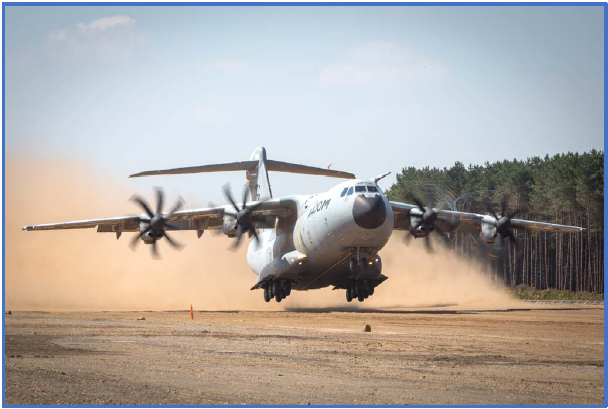
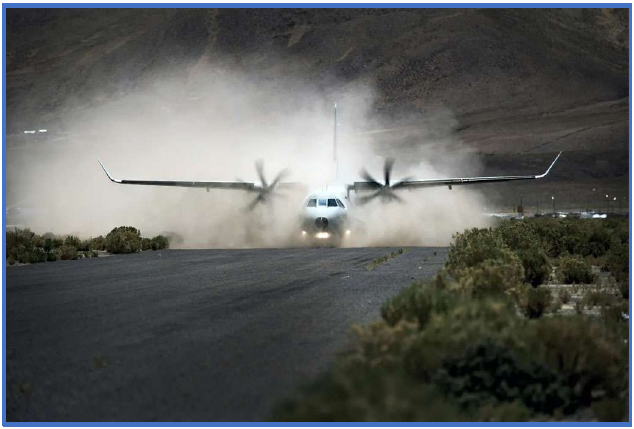
Aircraft, in particular, face additional challenges. Less dense air, a result of higher temperatures, reduces aircraft payload capacity, affects their operational ceiling, and requires longer runways for takeoff and landing, which may not be feasible at all locations.
Infrastructure
Airbases, deployed airbases, and other military infrastructures are also at risk due to climate change. Extreme temperatures can cause runway deformation, reducing their operability. Additionally, rising sea levels threaten coastal installations, while extreme weather events such as storms and hurricanes can cause significant and recurrent damage to facilities.
It is crucial for military infrastructure to adapt to withstand these new conditions. This includes strengthening coastal bases, implementing renewable energy systems, and developing technologies to improve the resilience of facilities against extreme weather events.
Human Resources
The impact of climate change on military personnel is equally significant. Extreme environmental conditions, such as excessive heat, can affect their physical and mental health, reducing their operational effectiveness. Heat stress, heat-related illnesses, and dehydration are increasing risks for military personnel deployed in regions affected by climate change.
To mitigate these effects, it is necessary to improve personnel training and preparation, ensuring they are equipped to operate in extreme climatic conditions. This includes using appropriate clothing, efficiently managing water and food supplies, and implementing mental health programs that address the stress associated with these conditions.
ADAPTATIONS IN PROGRESS
Air Forces
Measures are being implemented to adapt to the effects of climate change, such as the modernization of infrastructure, innovation in the design of more climate-resilient equipment, and improving personnel training to operate in extreme environments.
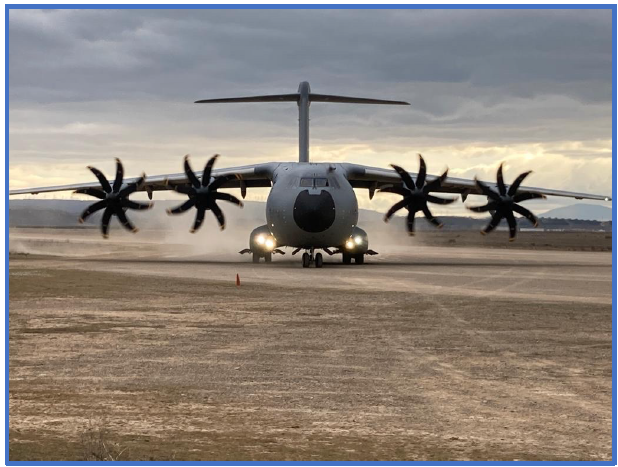
Moreover, the Spanish Armed Forces are integrating climate change into their strategic planning, ensuring that their operational capabilities remain effective even in adverse environmental conditions. This is reflected in the implementation of renewable energy technologies at military bases and the adoption of new protocols for equipment maintenance and operation in extreme climates.
The Defence Industry
The Defence Industry, in particular the aeronautical one, plays a crucial role in adapting to climate change. New technologies and materials are being developed to allow aircraft to operate more efficiently in extreme conditions. This includes developing more powerful and efficient engines that can withstand higher temperatures, as well as redesigning lifting surfaces to improve aircraft performance under different atmospheric conditions.
At an international level, investments are being made in research and development to create more resilient and sustainable aircraft. This includes electrification of aerial vehicles and the implementation of alternative fuels less dependent on fossil fuels, although these still face significant challenges in terms of reliability and durability under extreme conditions.
Additionally, international cooperation, particularly within the framework of NATO, is helping to standardize and share best practices for adapting to climate change in the military sphere. NATO’s Climate Change and Security Agenda is a clear example of how international collaboration can drive the development of more resilient military capabilities in the face of climate challenges.
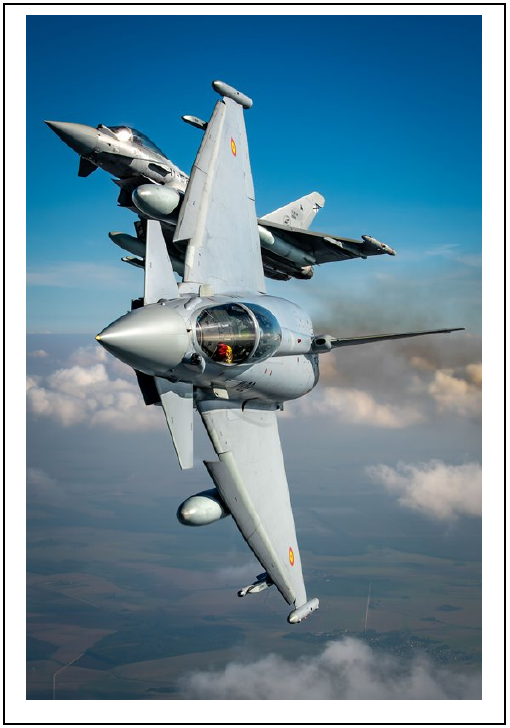
AIR OPERATIONS IN EXTREME HEAT ENVIRONMENTS
Spanish air detachments in Peacekeeping Operations (PKOs) have played fundamental roles in combat support, transport, and aeromedical evacuation (MEDEVAC) missions from bases in desert regions. These missions, critical in nature and execution, not only reflect the high capacity and training of our operational forces but also their commitment to protection and humanitarian aid in adverse and demanding contexts.
Location and Environmental Conditions
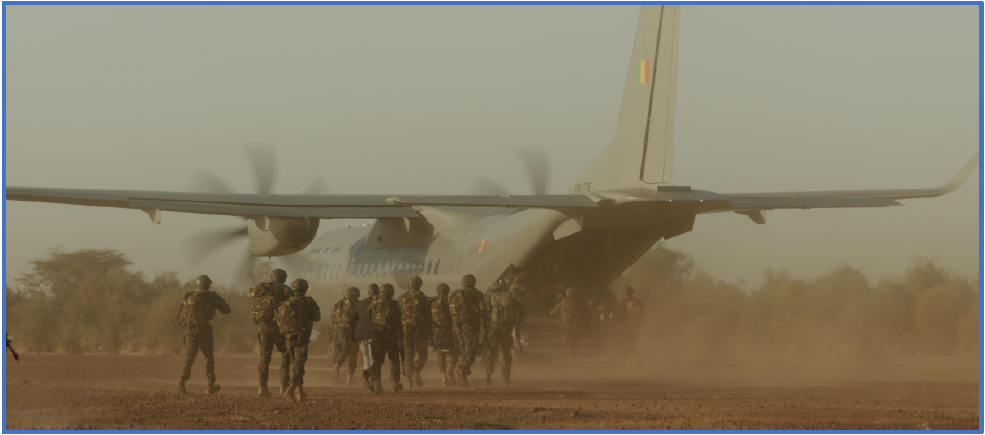
Operations have been carried out from airbases that present a desert environment with climatic extremes ranging from mild or cold winters to scorching summers where temperatures reach up to 50°C, and in certain specific areas, such as the maneuvering platform of the aerodromes, due to the heat accumulated by the asphalt, temperatures of up to 55°C are reached. These extreme conditions are not only a logistical challenge but also a physical one for the crews, who must quickly adapt to the intensity of the heat that can significantly affect their performance and health.
On the other hand, in the summer, it is common for there to be suspended dust in areas near the desert, due to the lack of humidity in the summer and the effect of prevailing northwesterly winds, which carry dust from the desert. Therefore, visibility reductions due to haze are quite frequent.
Thermal Challenges and Human Adaptations
During flights in these regions, crews face temperatures that can exceed 40°C. Heat acclimatization is, therefore, a primary concern. The human body employs mechanisms such as sweating and an increased heart rate to manage heat stress. According to the laws of thermodynamics, heat transfer occurs between the environment and the body, seeking a balance that allows homeostasis to be maintained. This process involves methods such as:
- Conduction: The transfer of heat through direct contact with hot surfaces inside the aircraft. A clear example of this type of heat transfer in aircraft can be seen when the aircraft has been exposed to the sun. Upon entering and touching the seat, controls, helmet, and various systems, one receives that heat generated by physical contact.
- Convection: Heat transfer through the displacement of a fluid or mass of air. In this case, a useful example is the hot air expelled from engines or the thermal inversion effect detected on several occasions during the deployment period. This effect has been observed at dawn when crossing hot air masses. In August flights, with takeoff scheduled around six in the morning local time, it has been observed that the temperature at the airfield is about 30°C before startup. Subsequently, after takeoff and climbing about 2000 ft, temperatures of 40°C were observed in the air. A 10°C increase when the most common situation we are used to, according to the vertical temperature gradient, is that the temperature would be 4°C less than at the surface, at a rate of 2°C less per 1000 ft ascent.
- Radiation: A method of heat transfer where a body receives heat from a source through the electromagnetic waves it emits. The sun is the main source of thermal radiation we know. It transmits heat to the inside of the aircraft or to the crew through surfaces that receive the electromagnetic waves. Additionally, a contributing factor to the increase in heat due to solar radiation is the greenhouse effect that occurs inside a cabin, where the received waves bounce off the different surfaces and generate more heat.
“During the summer period, flights are conducted in high temperatures, often exceeding 40°C, with the coolest periods being those executed during the night or at dawn.”
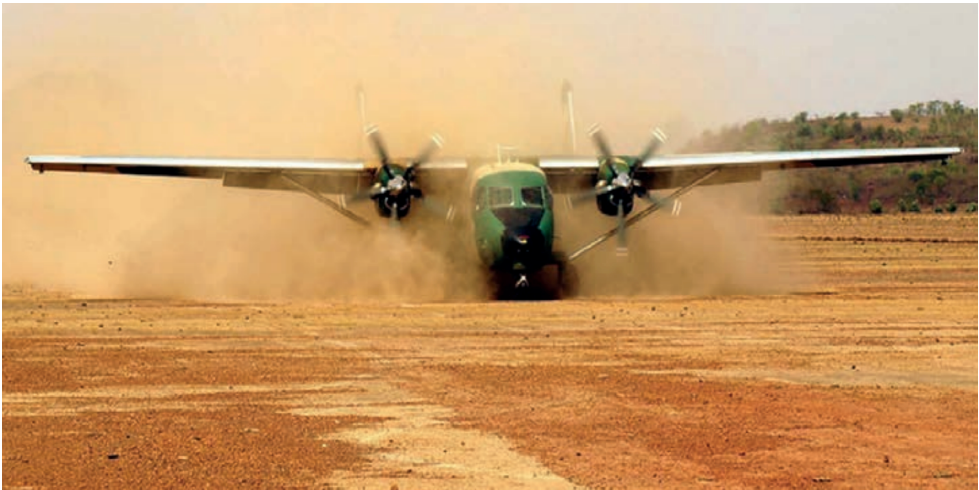
Exposure to these thermal challenges produces effects such as dehydration, headaches, loss of attention, muscle cramps, or syncope. In an aeronautical environment, evaluating the human factor, heat exposure increases the crew’s heart rate and fatigue. It degrades mental performance, making it harder for the person to think and analyze the various situations that may arise. Reaction time to stimuli is increased. A tunnel vision effect occurs, focusing attention on a primary fact and discriminating against secondary facts. Additionally, the difficulty of responding to unusual events or compromised situations increases. All this results in an increased rate of human error during heat exposure. A series of measures and recommendations can be applied to reduce the occurrence of these effects.
Heat Mitigation Technologies and Strategies
To combat these challenges, crews use various techniques and tools. Specialized clothing, such as the Under Body Armour (UBA) garment (i.e. Light shirt under fragmentation vest), allows better perspiration and management of body heat. Additionally, in long flights, portable coolers with ice and drinks are used to help maintain hydration. These practices are essential to reduce the risk of dehydration, heatstroke, and other adverse effects of extreme heat.
Flight Experiences and Adjustments
Flights of more than seven and a half hours, including hot refueling, have demonstrated the resilience and preparation of our air forces in adverse conditions. Flight planning considers factors such as the time of day and expected weather conditions to minimize the risks associated with heat. Night or dawn flights, when temperatures are lower, are preferred for long-duration operations. But we do not operate in isolation. Heat mitigation strategies and operational practices are compared and, on occasion, synchronized with those of our international allies.
“Continuous exposure to heat has various effects on the human body, which can range from mild to life-threatening, such as in the case of heatstroke.”
Recommendations and Practices for Heat Adaptation in Civilian and Military Environments
The lessons learned allow us to outline a series of recommendations for mitigating the negative effects of crew heat exposure, which can be employed in any unit on national territory during the summer, and why not, in our daily activities, especially in jobs that also face extreme conditions, such as aircraft line maintenance. Some recommendations include:
In relation to the crew or mechanics:
- Proper hydration: Drink enough water before, during, and after heat exposure, flight activity, or maintenance.
- Control exposure: Limit time in extremely hot environments, especially during peak solar radiation hours.
- Use appropriate clothing: Wear lightweight, breathable, and light-colored clothing to reflect solar radiation.
- Progressive acclimatization: Allow the body to gradually adapt to the heat through controlled exposures and gradually increasing the duration of exposure.
- Health monitoring: Watch for signs of heat stress such as extreme fatigue, disorientation, and cramps, which may indicate more severe conditions like heat stroke.
- Get enough rest.
- Maintain a balanced diet to avoid mineral and vitamin deficiencies.
- Stay in good physical shape.
In relation to the aircraft:
- Ventilate the aircraft before occupying the onboard position or working inside it.
- Park the aircraft inside hangars or in the shade as much as possible.
- Place cabin covers: although not as effective as the previous measure, it prevents heat transfer through solar radiation.
FINAL REFLECTION
Climate change is reshaping the global security landscape, and military operations must quickly adapt to these new realities. The Armed Forces, both Spanish and from other nations, are taking significant steps to mitigate the impacts of climate change and ensure that they remain capable of fulfilling their missions, regardless of environmental challenges.
At the same time, the aerospace industry, both in Spain and internationally, is playing a vital role in developing technologies and materials that improve the resilience of the Air Forces to climate change. With these actions, not only is national and international security protected, but the global fight against climate change is also advanced, demonstrating that defense and sustainability can and should go hand in hand.
The effectiveness of our military operations in extreme environments is a testament to the high level of preparation and adaptability of our Armed Forces. By facing and overcoming these challenges, we not only ensure the success of our missions but also advance our understanding and management of extreme conditions. This wisdom and experience, generously shared, benefit not only our military operations but also civilian applications where extreme heat conditions are a critical factor as well.