
Lessons from an A400M Incident in Avord AB: A Look Through the Swiss Cheese Model
Ever wondered how a simple concept like Swiss cheese can revolutionize our understanding of Safety? Dive into James Reason’s acclaimed Swiss Cheese Model, a game-changer in Aviation and Operational Safety! Imagine layers of defenses, each with its own imperfections, like slices of Swiss cheese. When these holes align, accidents slip through. Explore how understanding and fortifying these layers can prevent disasters, using as an example a real-world incident like the Airbus A400M incident at Avord Air Base. Discover the key insights that can transform Safety practices in complex systems across various industries. Let’s dive into the model that’s saving lives, one slice at a time. 🧀🚀
James Reason’s model on accident causality, commonly known as the “Swiss Cheese Model,” is widely recognized in the study of Aviation Safety and other fields of Operational Safety. This model is a useful tool for understanding how failures at different levels of an organization can align to cause an accident or a serious incident.
What are the Key Concepts of the Swiss Cheese Model?
- Layered Defenses: Reason compares an organization’s safeguards and defenses against failures to the layers of Swiss cheese. Each layer represents a barrier against hazards, but each one has imperfections or holes, similar to those found in Swiss cheese.
- Holes in Defenses: The holes in the layers represent weaknesses or failures in the organization’s defenses. These holes may include human errors, technical failures, inadequate procedures, or poor working conditions.
- Alignment of Holes: An accident occurs when the holes in several layers of defense align in such a way that a hazard passes through them without being stopped by any barrier. In other words, the defenses fail collectively due to the temporary alignment of these gaps.
- Active Errors and Latent Conditions: A distinction is made between “Active Failures (AF),” which are unsafe actions committed by people at work, and “Latent Failures (LF),” which are systemic failures that can remain dormant within the system until they contribute to an accident in combination with other factors.
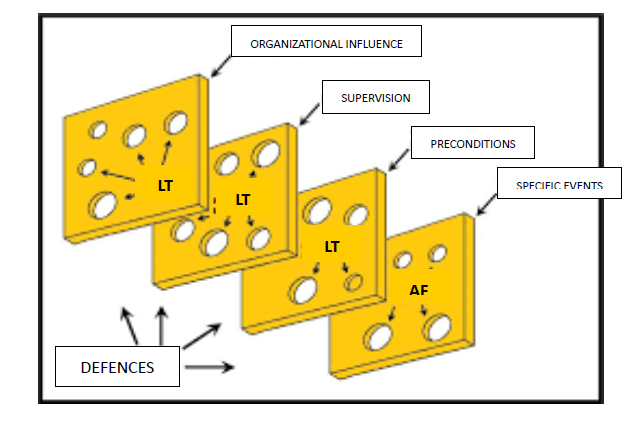
The Swiss Cheese Model is particularly useful for analyzing accidents and incidents in complex systems because it emphasizes how failures at different levels of an organization, including management decisions and organizational design, can contribute to unsafe outcomes. By understanding this, organizations can work to improve their defenses by identifying and closing these holes before they can align and cause a problem.
This model has been adopted not only in Aviation but also in healthcare, nuclear engineering, and other fields that manage complex systems and significant risks. Its strength lies in its ability to promote a deeper understanding of how human errors relate to organizational and technical failures, thereby facilitating more holistic and effective approaches to Safety improvement.
Practical Case: A400M Incident in Avord AB
Let’s take the Safety Investigation Report related to a specific event that occurred on May 27, 2021, at Avord Air Base 702, involving an Airbus A400M operated by the French Air and Space Force, as an example of the application of Reason’s Model that could well be turned into a study on Aviation Safety and Accident Prevention:
Executive Summary – Safety Investigation Report A-2021-12-I
On May 27, 2021, an Airbus A400M operated by the French Air and Space Force, while conducting a nighttime training operation, landed on an under-construction section of the runway at Avord Air Base 702. The flight was aimed at tactical flight instruction using Night Vision Goggles (NVG). During the final approach, the crew faced a partially unlit runway due to ongoing work, which was not effectively communicated. This led to a landing on an incorrect section of the runway. Fortunately, there was no damage to the aircraft or injuries to the crew.
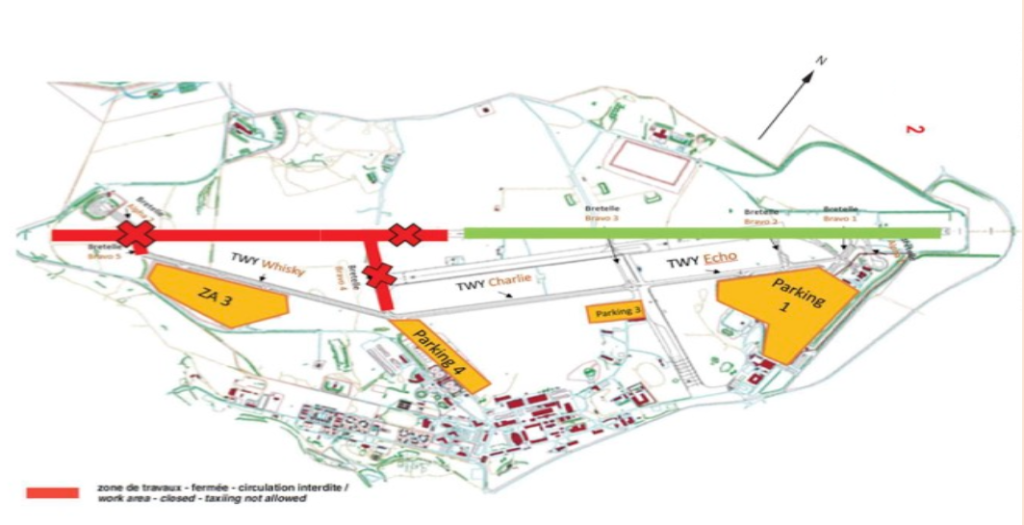
Incident Context
The context of the incident involves nighttime operations in an environment where visibility and communication between the crew and ground control are crucial. The investigation underscores the importance of risk management practices, especially in operations under low visibility conditions and when work on the runway alters the normal operational conditions.
Discussion
The discussion in the Report revolves around the risk factors associated with NVG navigation and the need for robust procedures to manage temporary changes in aerodrome infrastructure. Training policies and crew preparedness are also examined to ensure they are adequately equipped to handle abnormal situations.
Impact
The impact of the incident was limited due to the absence of damage to the aircraft and the physical integrity of the crew. However, the event underscores the importance of effective communication and systematic checks in air operations, and the need to enhance coordination and communication during nighttime operations and under special conditions to prevent future incidents.
Suggested Corrective Measures
The suggested corrective measures include reviewing Air Traffic Control procedures to improve communication about changes in runway status, increasing training on interpreting visual signals with NVG, and implementing stricter protocols for managing operations during runway construction activities.
Organizational Response
The organizational response following the incident includes immediate reviews of communication and control procedures at the Air Base, along with Safety briefings for the crew and Air Traffic Control personnel to reinforce situational awareness and risk management.
Final Conclusions
The final conclusions of the Report reaffirm the importance of clear and precise communication within all levels of air operations, especially under conditions that deviate from the standard operational norm. The lessons learned from this incident have led to significant improvements in procedures and practices at the Air Base and potentially at other facilities within the French Air and Space Force.
Incident Report Link:
Applying the Swiss Cheese Model to the Avord Incident, and considering the evidence provided in the Incident Investigation Report, we identify the following Layers of Defense and their failures/deficiencies/weaknesses:
- Flight Planning Procedures: The first line of defense in any air operation is rigorous planning. In this case, although there was detailed preparation, the understanding of NOTAMs and SUP AIP related to runway works was not adequate. This is the first “hole” in our Swiss cheese layer.
- Communication Between Crew and Air Traffic Control: Communication between the pilots and Air Traffic Control (ATC) was another critical point. Despite discussions about the runway condition, there was a lack of clarity and confirmation regarding the understanding of the restrictions and the status of the runway. This represented another “hole” aligned in our defense layer.
- Verification and Use of Technological Aids: The A400M is equipped with advanced systems that assist pilots in navigation and landing. However, incorrect use of these systems and the error in visually verifying and understanding the temporary markings on the runway led the crew to land in an area not intended for operations.
- Supervision and Ongoing Training: The involved pilots were adequately trained, but supervision in interpreting and applying information about runway conditions could have been better. Training sessions on how to handle atypical landing scenarios with NVGs could strengthen the layers of security.
Lessons Learned
As lessons learned from the Avord incident underscore the need for:
- Refining Communication: It is vital to ensure that communication between the crew and controllers is completely clear. All critical aspects of the flight must be confirmed, especially under non-standard conditions.
- Change Management Training: Training crews in recognizing and managing changes in the operational environment, such as works on runways.
- Procedures Audits: Conducting regular audits of flight procedures and communications to close the “holes” in the defenses.
Conclusions
In short, although the Avord event did not result in a serious accident, it provides a vital reminder of the importance of each layer of defense in Aviation. Through analysis according to the Swiss Cheese Model, we can see how the alignment of failures across multiple layers of security can lead to critical situations. Strengthening each layer and ensuring that the “holes” do not align can mean the difference between a safe flight and an incident, or, in the worst case, an accident.
Pilots and mechanics, your attention to every detail not only ensures the Safety of each operation but also strengthens the fabric of our aeronautical activities.