
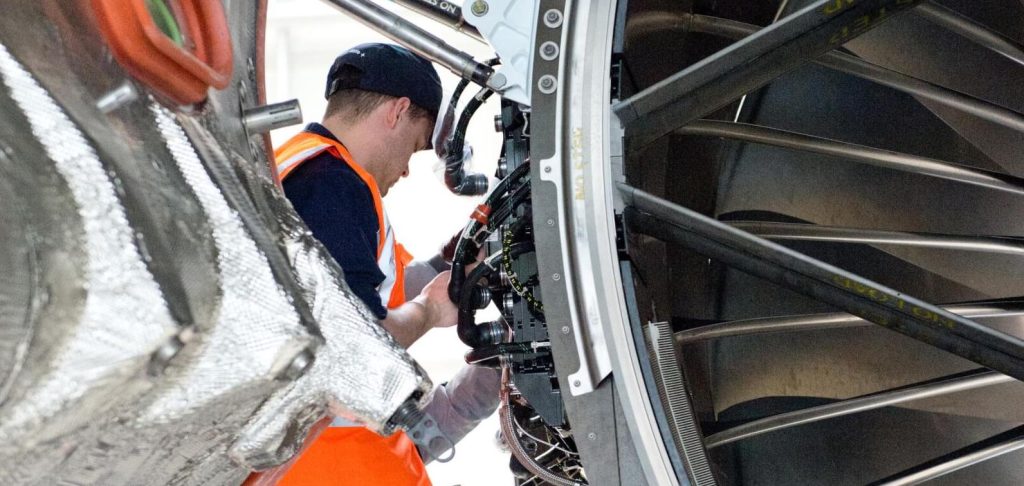
BEST MAINTENANCES PRACTICES FOR REDUNDANT SYSTEMS
Performing similar maintenance tasks on redundant systems at the same time, or by the same person during a particular maintenance check, may lead to the repetition of a maintenance error. This creates a risk of simultaneous failure of the redundant systems when the aircraft is back into service.
This article provides best practices to reduce this risk and ensure that the benefits of redundancy of systems or components on the aircraft is not compromised.
CASE STUDY 1:
THE LOSS OF TWO HYDRAULIC SYSTEMS IN FLIGHT
Event Description
An Airbus aircraft encountered the loss of two hydraulic systems during the cruise phase a long-range flight. Initially, the HYD B RSVR LO LVLHYD B RSVR LO LVL and HYD B SYS LO PR ECAM cautions were triggered, followed by the HYD B + Y SYS LO PR ECAM warning after 30 minutes. The flight crew, following procedures, turned off the affected hydraulic pumps, resulting the flight control system to revert to alternate law. Despite the dual hydraulic failure, the aircraft landed safely without further incident. The aircraft was grounded for further inspection.
Event Analysis
The hydraulic leak stemmed from the check valves installed in both the blue and yellow hydraulic systems (Fig.1). These check valves contained O-rings meant only for transportation and storage, not for operational use. When these O-rings were erroneously left in place, they were damaged under operational pressures, causing the hydraulic fluid leak. The Aircraft Maintenance Manual (AMM) establishes the removal of these transportation and storage O-rings before the installation of the check valves on the aircraft.
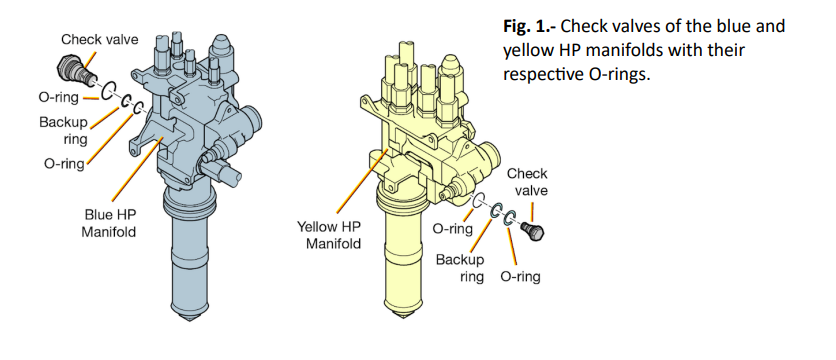
This event illustrates how maintenance errors on redundant systems—when performed by the same individual at the same time—can result in system-wide failures. In this case, the maintenance personnel had replaced the check valves on both the blue and yellow systems simultaneously and mistakenly left the non-operational O-rings in place, compromising both systems.
CASE STUDY 2:
ENGINE FIRE AFTER LANDING
Event Description
An Airbus aircraft triggered an ENG 1 FIRE ECAM warning shortly after landing. The flight crew followed emergency protocols, discharging two fire extinguishing agents, and the aircraft stopped safely at the gate. A preliminary inspection revealed fire damage on the engine 1 core at the 12 o´clock position.
Event Analysis
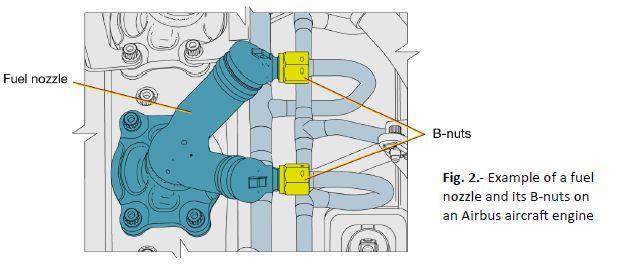
The fire was traced to a fuel leak caused by improperly torqued B-nuts on a fuel nozzle (Fig.2). Maintenance records showed that the B-nuts on both engines fuel nozzles had been incorrectly torqued during a maintenance check. Unlike the engine 1, the B-nuts of the engine 2 fuel nozzles showed no sign of leaks. As in the previous case, the same maintenance team had performed the task on both engines at the same time, leading to repeated errors on both redundant systems.
APPLYING BEST PRACTICES
To mitigate the risks highlighted in these case studies, operators and approved maintenance organizations should adopt specific best practices during the maintenance of redundant systems. The following recommendations can help prevent errors from being repeated across identical systems:
- Stagger the Scheduling of Maintenance Tasks
Avoid performing similar maintenance tasks on redundant systems simultaneously. This can reduce the likelihood of repeated errors that could lead to simultaneous failures in redundant systems.
- Assign Different Personnel to Redundant Systems
If staggering tasks is not feasible, assign different maintenance personnel to work on each redundant system. This reduces the risk of repeated errors by ensuring that any mistakes made by one person are not replicated across both systems.
- Additional Inspection and Cross-Check
Identify tasks involving redundant systems that require an additional level of inspection, cross-checking, or dual signature verification. This ensures that the task is completed according to the prescribed procedures and minimizes human error.
- Test One System at a Time
When testing systems or running engine tests, ensure that only one system or engine is tested at a time, unless the task specifies otherwise. This reduces the risk of simultaneous failures or unexpected behaviors during system tests.
- Adherence to Maintenance Procedures
Strict adherence to maintenance procedures is essential in reducing human error.
Following documented guidelines ensures that tasks are performed correctly, and maintenance personnel do not overlook critical steps.
INFORMATION.
The introduction section of the Aircraft Maintenance Manual (AMM) provides general recommendations related to the risk of human error during maintenance tasks.
FINAL REFLECTION
Maintaining the redundancy of systems in aircraft is critical to ensuring safe operations.
The case studies discussed above highlight how simultaneous maintenance tasks on redundant systems can lead to catastrophic failures if best practices are not followed. By staggering maintenance tasks, assigning different personnel, performing cross-checks, and adhering to strict maintenance procedures, operators and maintenance
organizations can significantly reduce the risk of human error and maintain the reliability of redundant systems.
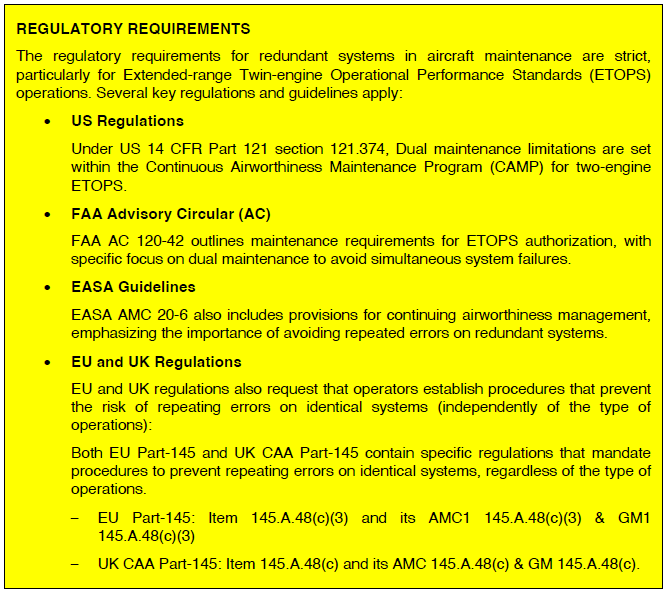
The regulatory framework provides robust guidelines to ensure these best practices are implemented, ensuring that the redundancy in aircraft systems continues to serve as a vital safety feature.
These practices are not only industry best practices but are also essential for compliance with regulatory requirements across various aviation authorities, including the FAA, EASA, and others. Proper implementation of these practices is key to maintaining safe flight operations and ensuring that redundancy systems function as intended.