
The A330 MRTT Programme: From the Opportunity to the Success
[Eneida, Virgilio]
INTRODUCTION
The History of the A330 MRTT Programme, and specifically the development of a FlyByWire Air-To-Air Refueling Boom System (ARBS) by the former EADS-CASA (now, Airbus Defence&Space), is a collection of high-stakes Engineering risks and Human Enthusiasm, sometimes hit by Frustration. Beyond the Product itself, the A330 MRTT is the proof on how a relatively small Team of people driven by Innovation, Engineering Excellence and a global understanding of the Customer Needs can turn an apparent not appealing Opportunity into a Success.
THE ORIGINS [2000-2001]: A window of Opportunity
- Boeing was the prominent manufacturer of aircraft with Air-To-Air Refueling (AAR) capabilities.
At that time, the global AAR fleet was overwhelmingly dominated by the Boeing KC-135 [4] Stratotanker, with around 550 aircraft in service, and the Boeing Boeing KC-10[5] Extender, with around 59 aircraft in service. It is estimated that 85% of the Western Countries with AAR capabilities were US manufactured: KC-135, KC-10 [both Flying Boom/Drogue-Hose systems] and Hercules C130 [Drogue-Hose system]. - Airbus (Europe) was only proficient in the AAR ‘Drogue-Hose’ system. The AAR ‘Flying Boom’ system technology was entirely owned by Boeing (USA).
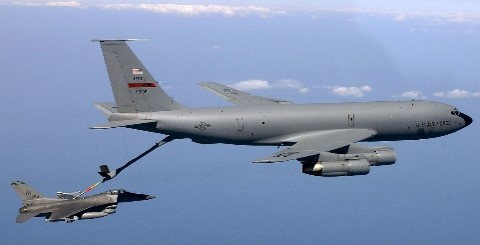
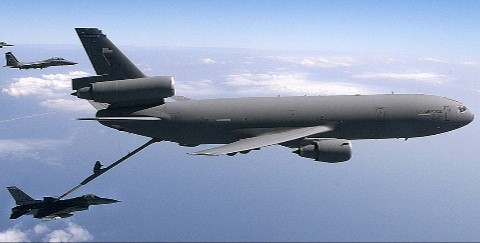
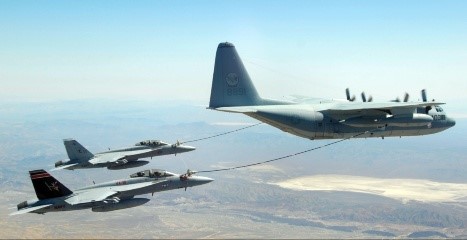
- C) The global AAR fleet was aging and many Air Forces, not only the USAF, were seeking cost-effective solutions to replace its old aircraft. Particularly in Europe, two (2) Air Forces had expressed its concerns regarding their AAR capabilities:
- a. In Germany, the GAF[6] trained its Tornado pilots in AAR tasks in Canadá (Goose Bay Base) and, for that purpose, the AAR service was hired to the USAF. In order to reduce costs, the German Government was decided to convert 4xA310 MRT[7] (already derived from 4xA310 from the former GDR[8] and only with transport role assigned) into Tankers.
- b. In United Kingdom (UK), the RAF[9] aimed to replace its aging VC10 and Lockheed TriStar fleet by a more modern and capable fleet.
Initial proposals by Airbus Military Derivatives aimed to fulfill the two (2) above-mentioned needs stated by the GAF and the UK RAF: In July 2001, EADS-CASA was awarded a contract to deliver 4xA310 MRTTs[10] to the GAF and also presented a bid, based on the A330-200, to the UK RAF for the Future Strategic Tanker Aircraft (FSTA)[11]. Both Airbus derivatives would be fitted with a Drogue-Hose AAR system.
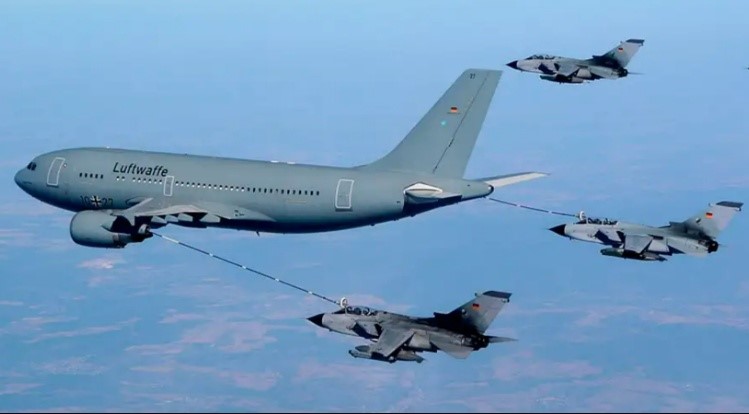
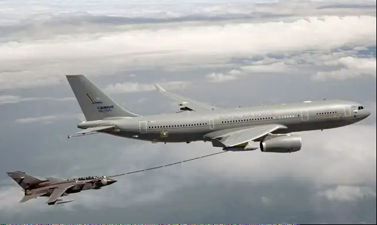
However, the big question within EADS-CASA still remained in 2001: Should the Company be embarked in a more ambitious objective covering not only Airbus derivatives fitted with a Drogue-Hose system but also with a Flying Boom system?. Several reasons were present against the decision to develop an original Boom:
- The “Why Reinvent the Wheel?” Factor: Boeing had been building booms since the 1950s (KC-135, KC-10). The mechanics of a high-speed, flexible pipe maneuvering in the wake of a heavy jet were well-understood by the Americans, but totally foreign to the Europeans.
- The Safety issues and Certification barrier:< There was a fear that it would not be possible to find any single Customer willing to collaborate, and certify, with a Company which had never been involved in the development of a Flying Boom. Many Product Safety concerns had to be overcome to make this product a reality.
- The Cost of Failure: Developing a clean-sheet Boom meant building a complex fly-by-wire system for a component that had traditionally been mechanical. Many feared the R&D costs would potentially sink the initiative before it even started.
It seemed that licensing the Boom design to Boeing was the less risky answer to the question. However, this initial opposition to develop an European Flying Boom was eventually overcome by the leadership exerted by the Head of the MTAD and a group of technical visionaries who argued:
- Industrial Independence:< A ‘Boeing-licensed’ Boom would be always subject to US export licenses and ITAR (International Traffic in Arms Regulations) which would be a serious restriction in terms of potential market expansion.
- Technological Leap forward: Instead of copying the 1970s-era mechanical boom of the KCs, the MTAD engineers proposed a full digital ‘Fly-by-Wire’ system fitted on an A330. By using 3D cameras and joysticks (the Remote Air Refueling Operator [RARO] station), a superior level of precision and Safety could be provided for the AAR function.
- Finally, CASA had a long history of military transport (C-212, CN-235, C-295) developments and the participation in the EF2000 Programme had provided deep insights into digital systems. On top of that, the engineering qualification of the MTAD personnel was considered adequate to face such a great challenge.
Unexpectedly by many, on November 2001 Alberto Fernández-Sarabia, Head of MTAD, ordered the launching of the Boom Development Programme. The Advanced Refueling Boom System (ARBS) was set to come to Life.
FIRST STEPS [2002-2005]: The Getafe Laboratory and the Turning Point
Following a period of conceptual designs assessments, the first Preliminary Design Review (PDR) for the ARBS was successfully passed on May 2003 which was followed by an also successful second PDR on June 2003. Finally, it was decided that the ARBS would be a high-performance, fly-by-wire refueling boom able to transfer fuel at high rates (upto 1200 gallons per minute) and remotely operated from a dedicated console placed behind the pilots. The boom operator (ARO) would use a high-definition 3D digital vision system able to provide depth perception and clear visibility in both day and night operations.
Once the design was frozen a full-scale Hardware-In-The-Loop ARBS simulator was built which was officially introduced to the public on April 2005 (see picture below).
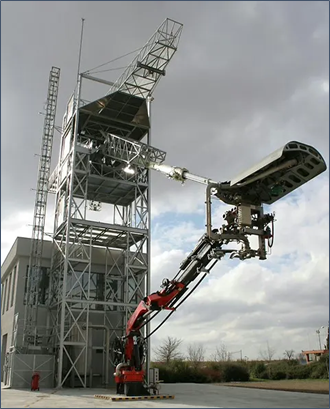
This simulator proved to be an excellent tool to carry out all types of development and qualification tests on the Boom system before performing those in flight. However, one of the biggest hurdles was the latency of the 3D cameras. In the early versions of the ARBS, there was a tiny delay between the aircraft moving and the operator seeing it. This caused “Pilot-Induced Oscillations” (PIOs). The Team had to pioneer high-speed video processing long before it was common in consumer electronics.
During this period, two (2) relevant events occured:
- Three (3) years after the signature of the contract, on September 24th 2004, the first GAF A310 MRTT was officially handed over to the Luftwaffe.
- On December 20th 2004, EADS and the Royal Australian Air Force (RAAF) signed an 815 MEuros contract for the purchase of 5xA330 MRTT (plus 3 optional). Formally, RAAF became the first customer for the future A330 MRTT equipped with the ARBS. This contract is considered the effective ‘Turning Point’ for the ARBS development Programme.
THE A310 BOOM DEMONSTRATOR [2005-2024]: A Flying Test bed and a real WorkHorse
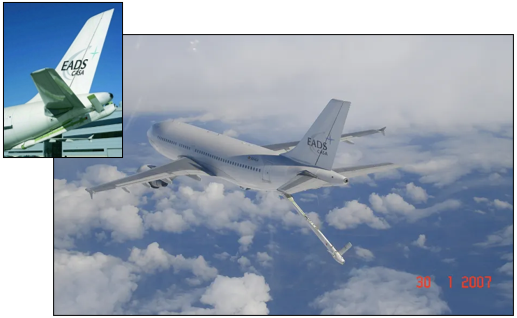
Originally operated by Air Comet, the A310-300 (MSN489) joined the Airbus fleet in September 2003 to be converted in an ARBS flying test bed. On March 16th 2006, the aircraft made its first flight with the boom attached and on January 30th 2007, the first boom deployments (upto seven) in flight were performed (see picture below).
The first dry contact between the A310 Boom Demonstrator and a Portuguese F-16 through the ARBS occurred on December 10th, 2007. On the other hand, the first wet contact was performed on March 2008 also with a Portuguese F-16. Six (6) years had been passed since the Head of MTAD ordered to design, built and fly a Flying Boom System.
Since then, the A310 Boom Demonstrator logged 353 flight tests accumulating 1150 hours of flight test hours. It has been an essential tool not only for the development of the ARBS but also as the main frame for proof of concepts, as the automatic air refueling, which will be key assets for the Air Forces of the present and the future.
The A310 Boom Demonstrator was decommissioned by Airbus Defence&Space on September 2024 and it will be replaced by an A330-200 (MSN655) which is already under MRTT conversion.
THE POLITICAL STORM [2008-2011]: The KC-X competition
The goal of the KC-X competition was to find a successor for the aging fleet of Boeing KC-135 Stratotankers, some of which had been in service since the late 50s (first KC-135 delivery to the USAF occurred on June 28th, 1957). The competition involved two (2) contenders:
- A) Boeing: Offering the KC-767 (later refined into the KC-46). This type could fit in existing hangars, and the proposal (still on the design desk) was based on the Boeing model B767.
- B) Northrop Grumman & EADS (Airbus): Offering the KC-30, based on the Airbus A330 MRTT, which was a reality (the A310 MRTT Boom Demonstrator was actively flying and the first RAAF A330 MRTT was about to be released for test flights).
In February 2008, the USAF selected the Northrop Grumman/Airbus KC-30 (designated the KC-45). arguing that the A330 MRTT provided more military utility. Boeing immediately filed a protest with the Government Accountability Office (GAO), claiming the Air Force had changed its requirements mid-stream to favor the larger Airbus plane. The GAO upheld the protest, finding “significant errors” in the evaluation. The contract was canceled, and the competition was reset.
Then, the Pentagon took over the process from the USAF and the requirements were simplified focusing mainly on price and fuel-burnt costs. Finally, in February 2011 the USAF reversed its previous decision and selected Boeing as the winner of the KC-X contract. To highlight that, at that time, the Boeing KC-46 was still on paper and the ARBS had been flying since December 2008.
Although the KC-X contest brought some frustration to the ARBS Team, it also contributed to boost the confidence in a system which was evolving satisfactory fast.
FROM DEVELOPMENT TO PRODUCTION [2008-Now]
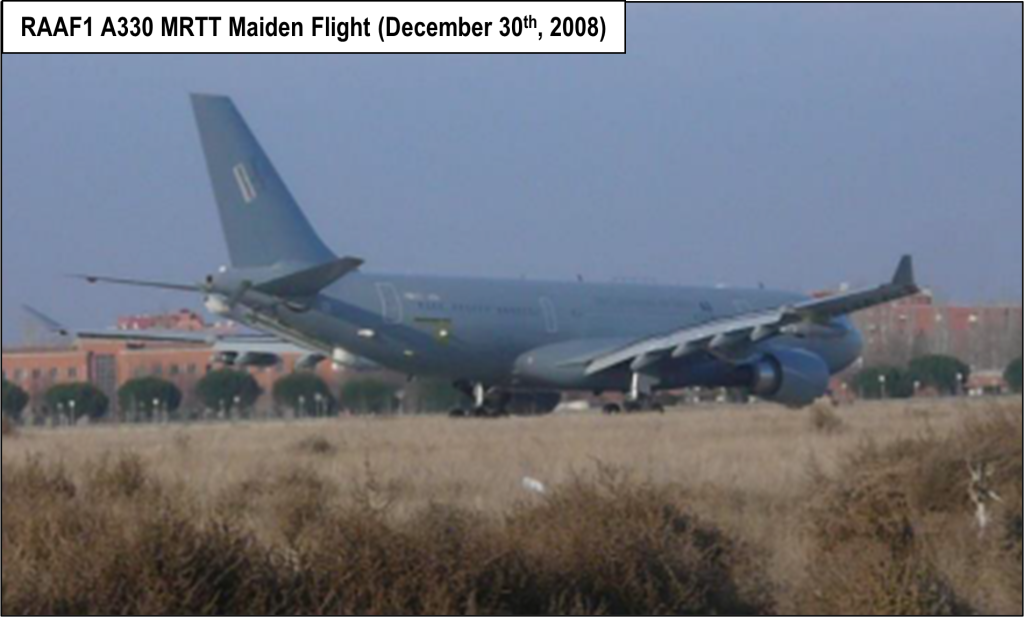
Since the issuance of the RAAF A330 MRTT TC by INTA, the MRTT, and specifically the ARBS, has gone through continuous enhancements which have permitted offering an excellent product to a wide variety of Military Customers.
At the present time, there are sixty six (66) A330 MRTT aircraft in active service globally. Including these, eighty five (85) units have been ordered by seventeen (17) different Customers so far:
| Customer | Region | Total Orders | Notes |
|---|---|---|---|
| Australia | Oceania | 7 | All delivered |
| United Kingdom | Europe | 14 | All delivered (via PFI) |
| France | Europe | 15 | Deliveries on-going |
| Saudi Arabia | Middle East | 10 | 6 delivered / 4 additional units ordered in 2024 |
| NATO (MMF) | Multinational | 12 | 10 delivered / 2 additional units ordered in 2025 |
| Canada | North America | 9 | — |
| UAE | Middle East | 5 | All delivered |
| Singapore | Asia | 6 | All delivered |
| South Korea | Asia | 4 | All delivered |
| Spain | Europe | 3 | Two (2) in active service [TK.24-03 delivered on March 31st 2025 and TK.24-02 delivered on October 29, 2025]. The third one, in conversion |
| Brazil | South America | 2 | — |
| Thailand | Asia | 1 | First Customer for the A330 MRTT+ |
| Other/Undisclosed | — | 7 | — |
| TOTAL [April 2026] | — | 85 |
THE WAY AHEAD
The way ahead for the A330 MRTT is to shift from being a bare platform with AAR capabilities to becoming a high-tech smart node in the sky. Three (3) main lines of action have been established: Advanced automation, next generation hardware and unmanned interoperability:
- A) A330 MRTT+ [Neo]: As an Airbus derivative, the A330 MRTT has to evolve along the commercial frame does. Now, the new tankers will transition from the A330-200 airframe to the more efficient and capable A330-800neo. The first announced Customer for the A330 MRTT+ is Thailand with the delivery expected by 2029.
- B) SMART MRTT [Autonomous Refueling (A3R) and Autonomous Assets Refueling (A4R)]: In February 2026, Singapore became the first country to achieve full certification for A3R, allowing for fully automated boom refueling in day and night conditions. In addition to this capability, Airbus Defence is expanding the MRTT AAR capabilities towards unmanned drones aerial refueling without any human intervention on either side.
- C) Connectivity HUB (C3IS): Beyond the AAR function, the A330 MRTT is also evolving to become a Flying Data Hub able to act as a advanced Command and Control (C2) node.
CONCLUSION
The ARBS development is viewed today as the project which opened the tanker market beyond a monopolistic scenario managed by the US.
Twenty-six (26) years later, it is recognized that a very enthusiastic group of people in the former EADS-CASA, driven by Innovation, Engineering Excellence and a global understanding of the Customer Needs, changed the geopolitical landscape of military procurement by proving that a European digital solution was not only possible but, in many ways, more advanced. Furthermore, over the years, the people involved in the A330 MRTT Programme have contributed to building an ecosystem of internationally recognized European Military Airworthiness Authorities, ready to handle any certification in the area of military operations. This ecosystem is essential for achieving sovereignty in Europe and, within it, the Defence branch of Airbus has evolved from being bare listeners in the back row to acting as a reference in standardization and interoperability Forums in both sides of the Atlantic.
NOTES & GLOSSARY
[1] ‘Fortune favors the bold’: Latin proverb which emphasizes the rewards of courage and bravery, particularly within military organizations.
[2] EADS: European Aeronautic Defence and Space // CASA: Construcciones Aeronáuticas S.A.
[3] Green aircraft (in the military context): Refers to a commercial airplane that has been manufactured but is not yet outfitted with its final military interior, mission systems, or specialized paint. This name comes from the fact that most manufactured airframes, before being painted, they are coated with a primer, usually green coloured, to avoid corrosion and ease the paint adherence.
[4] KC-135: Based on the Boeing 367-80 (military custom built), whose design is quite close to the B707.
[5] KC-10: Based on the McDonnell Douglas DC-10-30CF (true commercial derivative).
[6] GAF: German Air Force.
[7] MRT: MultiRole Transport.
[8] GDR: German Democratic Republic.
[9] RAF: Royal Air Force.
[10] MRTT: MultiRole Transport Tanker. According to Rafael Acedo (first Head of Airbus Military Derivatives), the MRTT was a term directly derived from the original term ‘MRT’ which designated the 4xA310 of the GAF devoted to transport and then selected for the tanker (Drogue and Hose) conversion.
[11] The FSTA Programme was launched by the UK Ministry of Defence under a Private Finance Innitiative (PFI) frame targeting to provide the UK RAF with AAR Services for 27 years. Airbus Defence was awarded this contract in 2008.
[12] INTA: Instituto Nacional de Técnica Aeroespacial. It is the Technical Body of the Military Certification Authority in Spain.